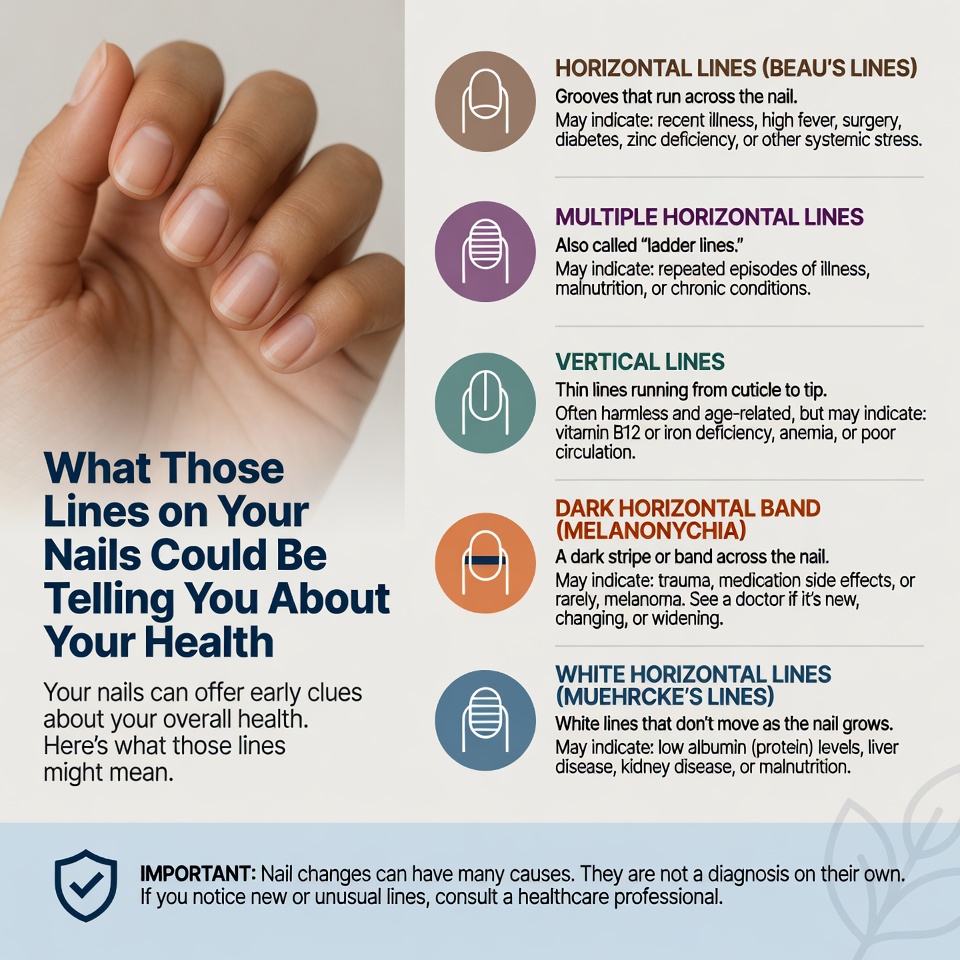
Most people think of their nails as little more than a cosmetic feature, but they can actually provide valuable clues about your overall health. Changes in nail color, texture, shape, or the appearance of ridges may sometimes signal underlying conditions that deserve attention.
One of the most common nail changes people notice is the development of ridges or lines. While these markings are often harmless, they can occasionally indicate nutritional deficiencies, aging-related changes, or health concerns affecting the body.
Understanding Nail Ridges
Nail ridges are raised or indented lines that appear on the surface of the nail. They may run vertically from the cuticle to the tip or horizontally across the nail. The type of ridge often provides clues about its possible cause.
Although ridges are usually not a reason to panic, paying attention to changes in your nails can help you identify potential issues early.
Vertical Ridges: Usually a Normal Part of Aging
Vertical ridges are the most common type of nail line. They extend from the base of the nail to the tip and often become more noticeable as people get older.
As we age, the body’s natural cell renewal process slows down. This affects how new nail cells are produced, leading to the formation of these subtle ridges. In most cases, vertical ridges are completely harmless and require no treatment.
However, if they appear suddenly or are accompanied by brittle nails, discoloration, or changes in nail shape, they may be linked to nutritional deficiencies such as low iron, zinc, protein, or certain vitamins.
Iron deficiency, in particular, may cause spoon-shaped nails that curve inward while also developing noticeable ridges.
Horizontal Ridges: A Sign Worth Investigating
Horizontal ridges, often called Beau’s lines, are generally considered more significant. Unlike vertical ridges, these grooves run across the nail and may indicate that nail growth was temporarily interrupted.
This interruption can occur after a serious illness, high fever, severe stress, injury, surgery, or certain medical treatments.
In some cases, Beau’s lines have been associated with conditions such as:
- Diabetes
- Thyroid disorders
- Kidney disease
- Severe infections
- Nutritional deficiencies
Because these ridges can reflect events that occurred weeks or even months earlier, they sometimes serve as a timeline of past health disruptions.
When Nail Color Changes Matter
Ridges are not the only nail changes that deserve attention. Dark streaks, black lines, red spots, or unusual discoloration beneath the nail should be evaluated by a healthcare professional, especially if they appear without an obvious injury.
While minor trauma can cause harmless bleeding under the nail, persistent dark markings may require further examination to rule out more serious conditions.
Nutrients That Support Healthy Nails
Healthy nails depend on proper nutrition. Several nutrients play important roles in nail growth and strength, including:
- Protein
- Iron
- Zinc
- Vitamin A
- Biotin
- Vitamin B12
- Omega-3 fatty acids
Eating a balanced diet rich in fruits, vegetables, lean proteins, nuts, seeds, and whole grains can help maintain strong and healthy nails.
When to See a Doctor
Most nail ridges are harmless and develop naturally with age. However, you should consider consulting a healthcare provider if you notice:
- Sudden changes in nail appearance
- Deep horizontal grooves
- Significant discoloration
- Pain or swelling around the nails
- Brittle or rapidly changing nails
Because nails grow slowly, they can provide important clues about changes occurring within the body over time.
The Bottom Line
Your nails can reveal more about your health than you might realize. While vertical ridges are often a normal part of aging, horizontal ridges and other unusual nail changes may signal underlying health issues or nutritional deficiencies. Paying attention to these subtle signs can help you take better care of your overall well-being and seek medical advice when necessary.
The next time you look at your hands, take a closer look at your nails—they may have something important to tell you.